Christmas party ideas for a small business have to solve a specific problem: the team is too big for a casual dinner that just happens, and too small to justify a ballroom, a committee, or an events budget with a comma in it. A good small-business Christmas party works inside those limits instead of fighting them — a sensible per-head budget, something the team actually chose, and food worth remembering, usually without hiring a venue at all. Here’s how to plan one that feels generous rather than cut-rate, from someone who books these for small teams every December.

Start with the one number that shapes everything: your budget
Set a budget per head before you choose anything else, because it quietly decides the rest. For a small business, that number is usually tighter than a big corporate’s — and that’s fine. A party for eight to fifteen people doesn’t need to be expensive to feel like a real thank-you; it needs to feel considered. Settle on a per-person figure first, then build the night to fit it, rather than picking an idea you love and discovering it costs double once you’ve multiplied it by the headcount. Spend the money on the one or two things people actually notice — almost always the food and one good activity — and keep everything else simple.
Ask your team what they actually want
This is the small-business advantage: you can ask. A big company sends a survey into the void; you can ask six or twelve people directly, and they’ll tell you. Some teams want a long lunch and to be home by three. Some want a proper night out. Some would quietly rather have the budget as a bonus than sit through forced fun. A two-line message — “lunch or dinner, and is there anything you’d hate?” — saves you from throwing the party you’d want instead of the one they’d want. It also surfaces the dietary needs, the one person who can’t do a Thursday, and the colleague who’ll happily help organize it.
You don’t need to hire a venue
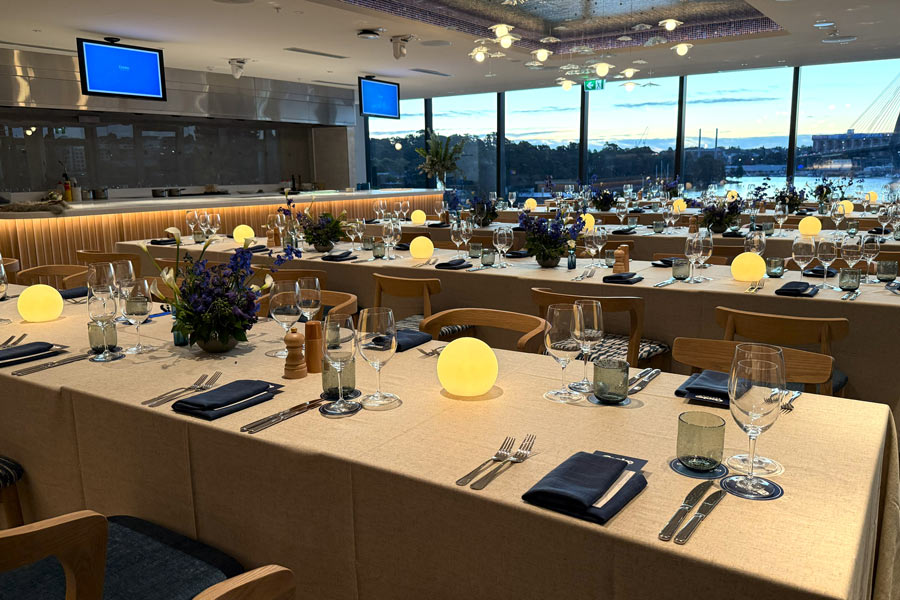
The instinct is to book somewhere. For a small team, you usually don’t have to — and skipping the venue is where the budget comes back to life. Your own office, cleared and decorated, is free and already yours. A private dining area at a restaurant you book as a group costs nothing beyond what you’d spend on the meal anyway. Someone’s home works for a team that’s close. The money a venue would have eaten goes straight into better food and a drink that isn’t the cheapest bottle on the list. Decorate the space you’ve got, bring the atmosphere in, and nobody will miss the function room.

Make the food the thing people remember
People forget the games; they remember the food. For a small-business party it’s also the easiest place to make a modest budget feel generous, because a small group means every plate can be good rather than catering-tray mediocre. A few ways to do it well:
A private chef at the office
For a small team, a private chef is more within reach than most people assume — a smaller headcount is exactly where it makes sense. A chef cooks a proper meal at your table: a seated dinner, canapés on arrival, or a shared feast built on premium, seasonal, market-bought ingredients, cooked fresh and served by someone who isn’t a colleague stuck behind a tray all night. CHEFIN only works with chefs who have more than thirteen years in professional kitchens, so the person cooking has run a service like yours many times over. A full-service Holiday Feast is the version most small offices book — a chef handles the menu, the cooking, the serving, and the clean-up, so whoever usually organizes the party gets to actually attend it.
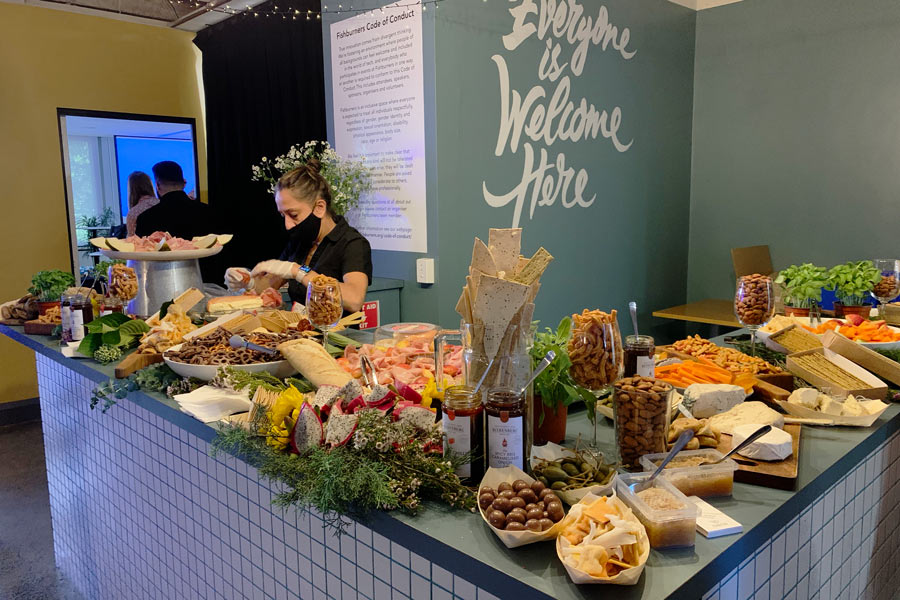
Passed bites and a grazing table
If your night is more mingling than sitting down, skip the plated dinner. Passed Christmas appetizers keep a standing party moving — hot bites arriving through the room while people talk — and a generous Christmas buffet down the middle of the table lets a small group graze through the evening rather than queue. Both suit a team that wants the party to feel like a party, not a dinner reservation.
The no-fuss option: catering delivered
If nobody on the team wants to cook and the budget won’t stretch to on-site service, Christmas catering delivery is the honest middle path — a chef-prepared spread that arrives ready to put out. It beats a supermarket platter without the cost or coordination of a full catered event, which is often exactly the right call for a first proper team party.
Pick a theme and let it do the work
A theme makes a small party feel intentional, and it costs almost nothing. It writes the invitation for you, it gives the photos a look, and it gives people something to show up as rather than just show up. The low-effort winners for a small team: an ugly-sweater afternoon, a single-cuisine night (“we’re doing Italian this year”), a decade theme, or a smart-casual “end-of-year dinner” if you’d rather keep it grown-up. Pick one, say it clearly on the invitation, and let it carry the atmosphere so you don’t have to over-plan everything else.
Unique Christmas party ideas for a small team
Small teams can do things a hundred-person party can’t, and leaning into that is how you make the night memorable rather than generic. A few that only work because the group is small:
- A chef-led cooking class. Everyone cooks a few dishes together and then eats them — it’s the activity and the meal at once, and it turns a quiet team talkative in a way a dinner table rarely does.
- A long table at a restaurant you’d never expense normally. With a small group, one genuinely good meal out is affordable in a way it isn’t at scale.
- A daytime outing plus dinner. A cooking demo, a tasting, a short experience, then food — a shape a big group can’t pull off logistically.
- Let the team pick the restaurant and the company picks up the tab. Sometimes the most-appreciated “idea” is simply trust plus a paid bill.

Planning a bigger team party?
If your headcount is closer to a whole-company event than a small team — or you want the full menu of themes, games, entertainment and inclusive-party planning — our wider guide to work Christmas party ideas covers the formats that scale past a small office.
Small business Christmas party FAQs
What’s a good budget per person for a small business Christmas party?
There’s no single right number — it depends on your team and whether it’s lunch or a full evening — but the useful move is to set a per-head figure first and build the party to fit it, rather than the other way around. A smaller team means the same total budget goes further per person, so a modest number per head can still buy a genuinely good night. Decide the figure, then choose the food and one activity around it.
What are some unique Christmas party ideas for a small office?
The ideas that only work because the office is small: a chef-led cooking class where the team cooks and eats together, a long-table dinner at a restaurant you wouldn’t normally expense, a daytime experience followed by food, or simply letting the team choose the venue on the company’s tab. Small groups can be spontaneous and specific in ways a large corporate party can’t.
What can you do for a Christmas party with a small team and no venue?
Plenty — most small-team parties don’t need a hired venue at all. Decorate your own office and bring in a private chef or catering; book a private area at a restaurant as a group; or host it at someone’s home if the team is close. The money saved on a venue is better spent on the food, which is what people actually remember.
How much does it cost to have a private chef cater a small office party?
As a guide, CHEFIN’s Christmas appetizer and cocktail service starts around $65 a head, a Christmas buffet around $165, and a full-service seated Holiday Feast around $195 — all tax included, with nothing added at checkout. CHEFIN charges the same per-person rate above the group minimum regardless of headcount, and the same rate wherever it serves, so the quote you plan around is the quote you pay.
Ready to plan it?
When you’ve settled on a format, start with the Holiday Feast for a full-service private chef, or tell us about your event and we’ll match the right option to your team and your budget.