To set a beautiful table like in Michelin restaurants, use a ruler to measure exactly one inch from the edge of the table to the bottoms of the utensils, ensuring flawless geometric symmetry for every single guest.
This uncompromising attention to detail is the secret to mastering the art of the table-setting. Whether you are preparing a multi-course meal or a six-course meal for a formal dinner party, the proper way to set a dining table visually communicates your standards before the first drop of wine is poured. When you create a table with precision, it makes guests feel welcome and elevates the entire dining experience.
The Economics of Ambiance: What is the 30/30/30/10 Rule for Restaurants?
When evaluating the cost of luxury dining, industry-standard hospitality accounting relies on the 30/30/30/10 rule for restaurants. According to standard financial models, a successful restaurant allocates its revenue exactly as follows:
- 30% for food and ingredient costs
- 30% for labor and skilled chefs
- 30% for overhead
- 10% profit margin
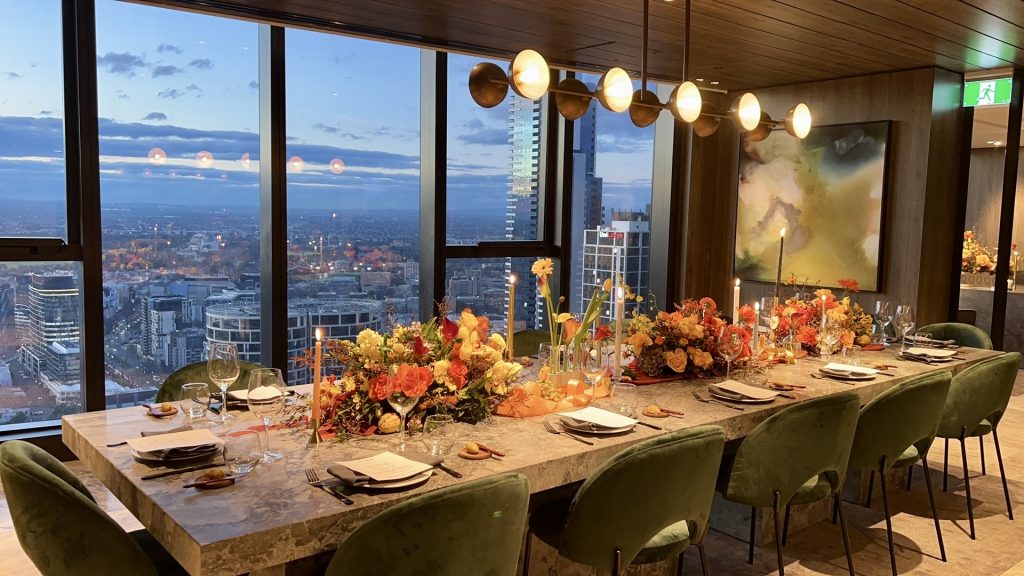
That 30% overhead covers the restaurant setting—the flawless dinnerware, the premium glassware, and the crisp linens. Michelin-starred establishments invest heavily in this overhead because a beautifully set table directly influences customer reviews and the perceived value of the meal. Fortunately, you can bring this exact standard of fine dining to your home entertaining without the commercial overhead.
From Basic to Formal: The Golden Rules for a Beautifully Set Table
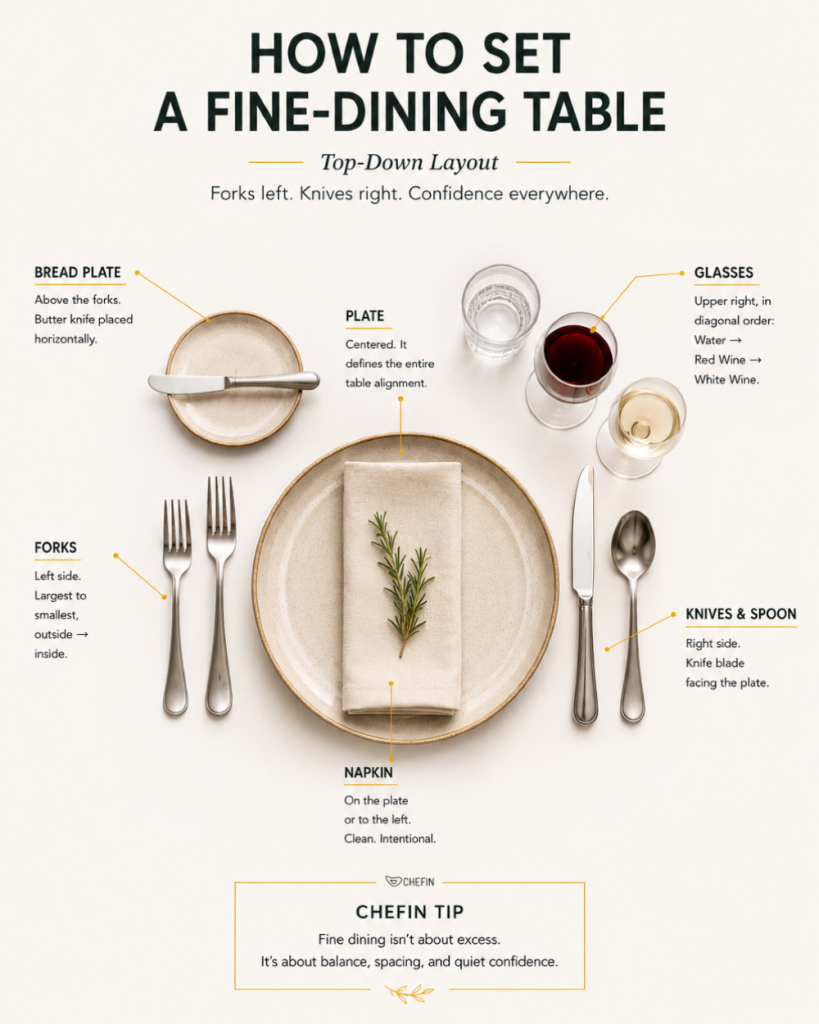
What are the different types of table settings, from basic to formal? A basic table setting or informal table setting might only require a dinner plate, a dinner fork, a dinner knife, and a water glass for a casual get-together. However, a formal table setting requires strict adherence to classical culinary geometry.
In Auguste Escoffier’s foundational 1903 text, Le Guide Culinaire, the rules of service were formalized to ensure flawless execution. Today, setting the perfect table for Service à la russe (where food is individually plated) requires these concrete rules:
- The Spatial Metric: According to fine dining service standards, allow exactly 24 inches of table space per place setting to ensure guests are comfortable.
- The One-Inch Rule: Align the bottoms of the utensils and the edge of the plate exactly one inch from the edge of the table.
- Outside-In Progression: Place utensils and glasses in the exact order they will be used.
- Left-Side Alignment: The salad fork sits on the far left, with the dinner fork placed closest to the plate.
- Right-Side Alignment: Knives and spoons go to the right. The salad knife is on the outside, the dinner knife is closest to the plate (blades always facing inward), and a soup spoon sits on the far right. If serving seafood, an oyster fork is placed to the right of the spoon.
- The Dessert Axis: The dessert spoon and dessert fork are laid horizontally directly above the serving plate. The fork handle must point left, and the spoon handle must point right.
- Glassware Positioning: The water glass sits precisely one inch above the tip of the dinner knife. Place the wine glass to the right. Multiple red wine glasses and white wine glasses should form a 45-degree angle pointing toward the center of the table.
Curating the Ambiance: How to Create a Table Setting That Reflects a Specific Theme, Color, or Season
To curate an eye-catching table that reflects a specific theme, color, or season, you must balance aesthetics with functional tableware. According to event styling experts, the best restaurants update their tablescapes subtly to respect the season without overwhelming the food.
- Linens: Start with a 300-thread-count Egyptian cotton or pure linen tablecloth. To achieve a Michelin-star restaurant finish, hospitality professionals iron the tablecloth directly on the dining table to eliminate fold creases.
- Chargers and Plates: Place a decorative charger with the dinner plate on top to anchor the formal setting. Swap standard silver chargers for woven rattan in the summer, or brushed gold in the winter to instantly change the seasonal tone.
- Centerpieces: Keep floral arrangements and candlesticks below 12 inches in height. According to fine dining interior design principles, anything taller obstructs eye contact and disrupts conversation during the main course.
The Faux Pas: Common Table Setting Mistakes to Avoid
Even a good table setting can be ruined by a few easily avoidable mistakes. When setting the tone for your guests, avoid these culinary faux pas:
- Fingerprints on Glassware: Never place a cloudy wine glass on a formal table. Michelin-level staff polish all flatware and glassware using a microfiber cloth over steam to ensure a flawless shine.
- Overcrowding the Silverware: If your menu does not include a soup or salad, do not place a soup spoon or salad knife on the table. Only set out the cutlery required for the specific menu.
- Aromatic Interference: Never use scented candles. The olfactory experience is a critical part of tasting food; artificial candle scents will clash with the aroma of the meal.
Bring the Ultimate Expression of Fine Dining to Your Home
Mastering table setting etiquette shows attention to detail and is guaranteed to leave a lasting impression on your guests. However, the true luxury of hosting dinner parties is being able to sit back, relax, and actually enjoy the evening.
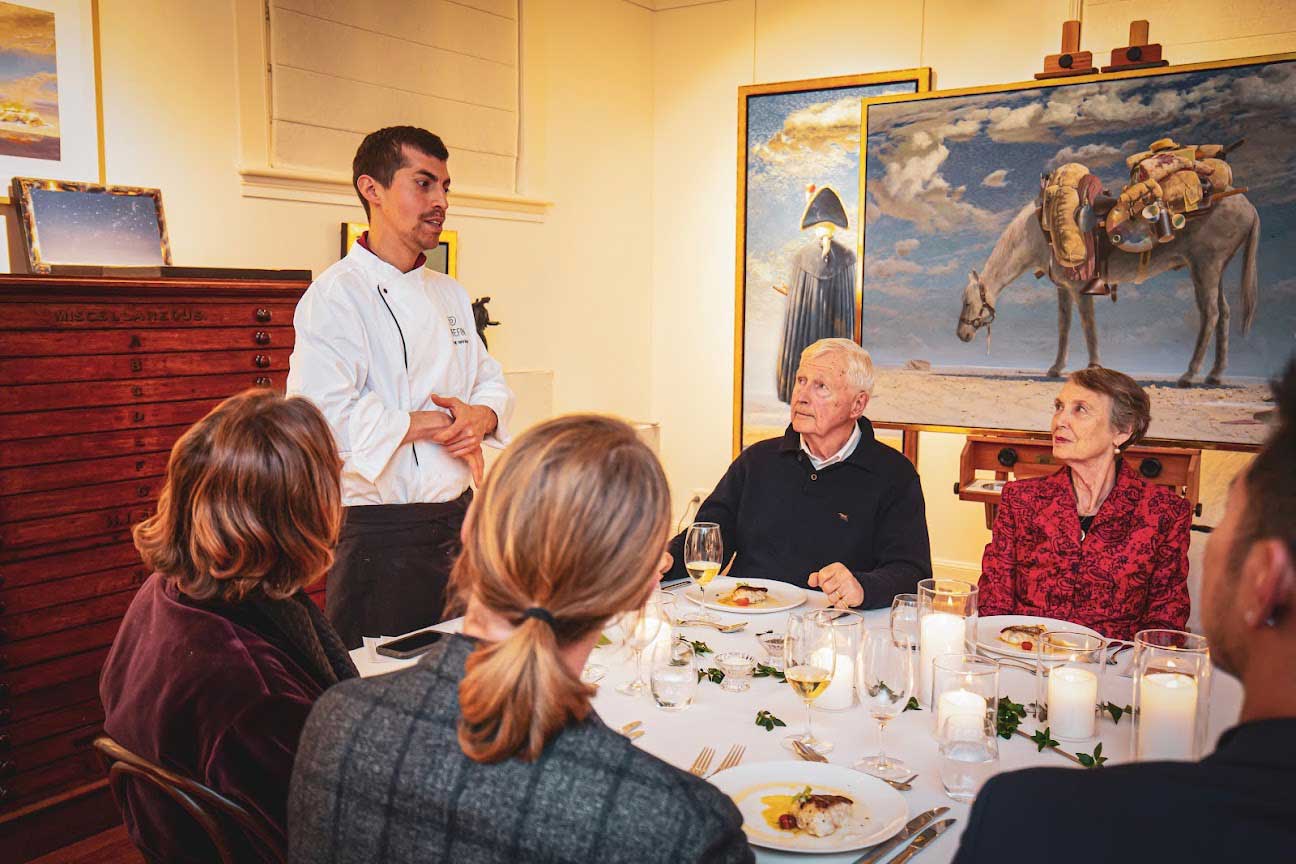
At CHEFIN, our screened private chefs deliver restaurant-level cuisine using the highest quality ingredients, backed by our $20M general liability coverage and strict privacy standards, including Chatham House Rules for complete discretion. Why worry about the kitchen when you can have an unforgettable dining experience crafted by a culinary master? Book a Private Chef for any occasion to elevate your next formal dinner into an extraordinary event.
Book a Private Chef.
Backed by CHEFIN.
External References & Sources
- The 30/30/30/10 Restaurant Rule: For deeper insights into the hospitality industry’s standard financial modeling, including overhead and labor allocations, refer to POS industry leader TouchBistro’s guide to restaurant economics. Read TouchBistro’s Guide to Restaurant Prime Costs
- Table Setting Etiquette & Spatial Metrics: The standard measurements for formal dining—including the 24-inch per-guest rule, the 1-inch table edge alignment, and centerpiece height limits—are established by classic etiquette authorities. Explore The Emily Post Institute’s Table Setting Guides
- Auguste Escoffier & Service à la Russe: To learn more about the father of modern fine dining, Le Guide Culinaire, and the shift to individually plated courses (Service à la russe), visit the educational archives of the Auguste Escoffier School of Culinary Arts. Discover the History of Escoffier
- Fine Dining Service Standards: For more inspiration on the meticulous attention to detail required in world-class restaurants, including glassware polishing and tablescape curation, explore the official features from the Michelin Guide. Visit the Michelin Guide Magazine